Sell 60,000 tickets and you fill a stadium for an afternoon. Create 60,000 memories and you'll fill a stadium forever.
Experiences become memories, memories become traditions and experiential marketing is the way to create an emotional bond with customers that pulls them back to your brand over the competition again and again.
Pro sports teams live and die not by their teams’ records, but by their ability to create experiences that begin long before kickoff and continue way after the stadium has emptied. They create fans, not customers.
We’re here to say that experiential marketing is for every industry. While your marketing will be specific to your brand, we’ve pulled three principles from pro sports marketing to help you convert customers into loyal brand fans.
In this guide, we’ll break down experiential marketing in sports examples drawn from real teams and brands, then show how those same strategies can be applied across industries.
What makes sports experiential marketing so effective?
At its core, experiential marketing works because it creates emotion, not just awareness. And no industry understands that better than pro sports.
Sports teams don’t market products; they market moments. Every touchpoint in sports marketing is designed to make fans feel something and feel it together. The shared emotion is what turns a single experience into a lasting memory, and a memory into long-term loyalty.
The strongest experiential marketing examples in sports are immersive and interactive. They invite fans to get up out of their seats and participate. They reward attention, amplify momentum, and extend the experience far beyond the physical event through digital channels and social conversation.
This is why experiential marketing in sports examples translate so well to other industries. When brands focus on how people feel before, during, and after an interaction, they learn more about their audience to improve their experience the next time they interact. This is the advantage sports marketers have been playing for years.
What translates isn't the tactic — it's the principle underneath it. The medium you choose — the event, the touchpoint, the format — communicates something before your audience reads a single word. Udi Ledergor, former CMO at Gong, invokes Marshall McLuhan's idea with a sharp marketing application: most brands are obsessing over what to say while ignoring the signal their channel selection is already sending. This short video breaks down why the medium isn't a delivery vehicle — it's the message itself.
7 Game-changing experiential marketing examples
Here are seven experiential marketing examples in sports that show how experiences turn audiences into lifelong fans.
1. Utah Jazz arena renovation driven by fan research Listen and Learn
Before changing a single seat or concession stand, the Utah Jazz spent a year listening to what fans actually wanted. By grounding the experience in real fan insight, the team transformed the arena into a space designed for making lasting, brand-loyal memories.
After the Utah Jazz’s $125M arena renovation, Bart Sharp, CMO at the Utah Jazz, shared that his team spent an entire year researching what Jazz fans wanted beyond the court before making any renovation plans. Their research showed a strong desire among their fans for more premium options, ice cream (yes, Utahns love their ice cream), and Instagrammable photo opps. With these findings, the Jazz transformed their arena to provide fans unforgettable experiences.

2. Built Bar’s customer feedback loop as a live brand experience
Built Bar shows that experiential marketing can happen far beyond the venue. By placing customer service directly under marketing, the brand turns real-time feedback into responsive experiences that make customers feel heard and valued.
BuiltBar has a unique way of ensuring their customers are heard and that feedback gets injected directly into their marketing campaigns. “We’ve actually put the customer service team under marketing leadership. That way we can pivot and change quickly without going through multiple channels,” said Colleen Ferrier, VP of Marketing at Built Bar. “So we’re hearing as leaders directly what the customers love, what they don’t love, what they’re liking, what they’re not liking. And we as a team can shift and change quickly for them.”

By directly listening, learning, and responding to customers, Built Bar’s marketing team has the ammunition they need to generate more value for their customers.
As marketers, we must prioritize listening before campaign creation. We should never assume we know why someone came to our websites or their purposes for joining in the experience. Every time we make assumptions, we limit ourselves and miss opportunities for our customers, putting time and energy in the wrong places.
Do This: Customer feedback/research surveys always endear customers to you—show you care and learn from your most important audience. Also, consider moving Customer Service under Marketing to close the customer feedback loop.
3. Phoenix Suns’ “Valley-Oop” moment-to-merch activation
When momentum strikes, great experiential marketing captures it instantly. The Suns turned a split-second, game-winning play into a physical product almost overnight, allowing fans to own a piece of the moment while the emotion was still fresh.
With only .9 on the clock, Deandre Ayton scored a game-winning alley-oop against the Clippers during the Suns’ 2020-2021 season. Being hyper-engaged on social media, the Suns’ social media team quickly recognized an opportunity to capitalize on the excitement surrounding the play. New “Valley-Oop” shirts were announced on their social channels that night and available for purchase the very next day. No one could have predicted the alley-oop, let alone prepare t-shirt designs. But the Suns were ready—they took an awesome on-court experience and memorialized it for the fans.

Marketing teams have to find ways to monitor momentum. Bart Sharp shares how this is a key principle they follow within their marketing strategy. “I’ve learned in this industry you’ve got to be very nimble because things can change very fast. In an instant, we have to shift our focus and find ways to capture that momentum.” Sometimes the team is playing really well and there’s a story there. Sometimes there’s not. In pro sports (and really in just about any industry) you can’t predict how the seasons will go. You can have an idea based on data you’ve gathered (players on the team, how we compare to competition, injury reports, etc.) and that informs direction. But if things get going and you notice momentum is building somewhere else, you’ve got to make that pivot.

Marketers may be the best planners in the world, but following the momentum inherently means that marketers must be ready to abandon their plans—which is frankly really hard to do! What if the Suns chose to just stick to their content calendar? They would’ve missed out on a huge opportunity for the brand to bond with fans.
4. Oreo’s Super Bowl blackout cultural moment
Not all experiential marketing examples happen inside a stadium. Oreo’s now-famous “dunk in the dark” response during the Super Bowl blackout shows how brands can insert themselves into shared cultural experiences by acting quickly and understanding the moment.

We all remember the classic example of Oreo capitalizing on the power outage in the 2013 Superbowl with a tweet about “dunking in the dark.” The brand acted quickly around a current event, which was only possible because they were aware of what their audience was doing and how to appeal to them in that moment.
It doesn’t take a huge team or expensive software to interact with your audience. Plan all you want, but be ready to strike when the opportunities arrive.
Do This: Marketers can’t capitalize on momentum if they aren’t looking for it, if they don’t have a supportive infrastructure, or if they don’t have the green light from leadership.
5. Real Salt Lake’s fan-first social engagement strategy
Experiential marketing doesn’t always require large-scale activations. Real Salt Lake demonstrates how thoughtful, personal interactions on social media can become powerful micro-experiences that deepen fan loyalty.
Tyler Gibbons, VP of Marketing at Real Salt Lake (RSL), shares how seriously they take online interactions with their fans. “When someone shares wearing a team jersey and you respond back to them on social, you probably made that person's day. You're going to have a fan for life.” In their case, RSL is extremely careful about who on their team has the permission to dialogue with fans—they don’t underestimate the power of these micro-experiences.

Creating an experience doesn’t mean that you need a full event or production. Experiences can be small and individualized for your specific audience. Hubspot emphasizes that even when you give your audience a tangible experience, there must still be an online dialogue happening. Dialogue is especially crucial to industries where the experiences are largely digital. It’s those conversations that become a major part of audience-brand bonding.
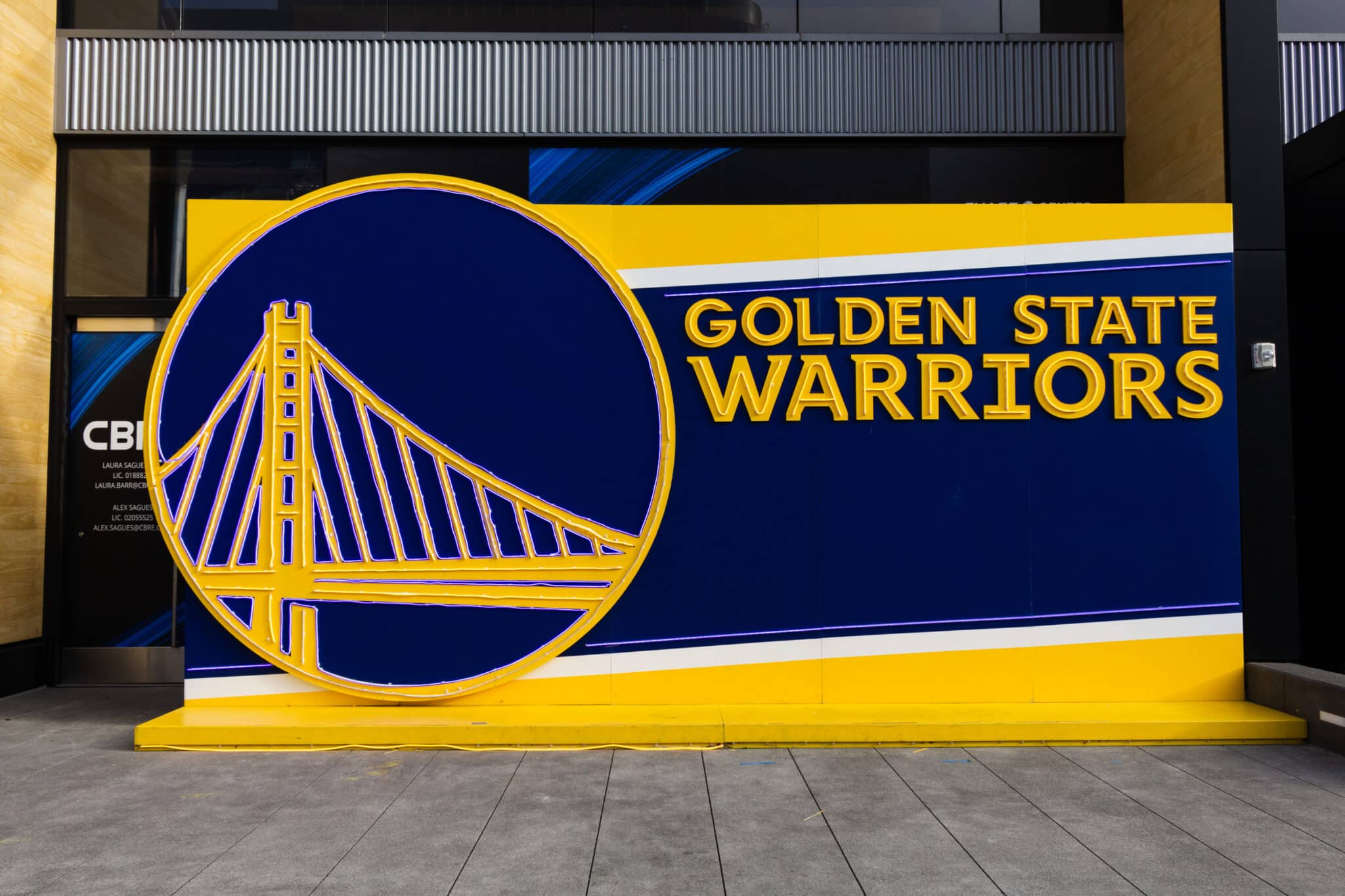
6. Golden State Warriors’ virtual reality courtside experience
Not every fan can sit courtside. Geography, cost, and capacity make that impossible. The Warriors decided to redesign that reality.
By experimenting with virtual reality, the Warriors created a way for fans to experience games from a courtside perspective without ever stepping foot in the arena. Using VR technology, fans could feel closer to the action, immersed in the sights and sounds of game day, even if they were watching from hundreds or thousands of miles away.
This is a strong example of experiential marketing because it expands access instead of limiting it. The experience isn’t just about watching basketball, but about giving fans a story to tell. Now, fans can feel like they were courtside, even if they technically weren’t.
The takeaway here isn’t that every brand needs VR. It’s that the best experiential marketing examples use technology to remove barriers and deepen emotional connection.
7. Dallas Cowboys’ AT&T Stadium immersive tours
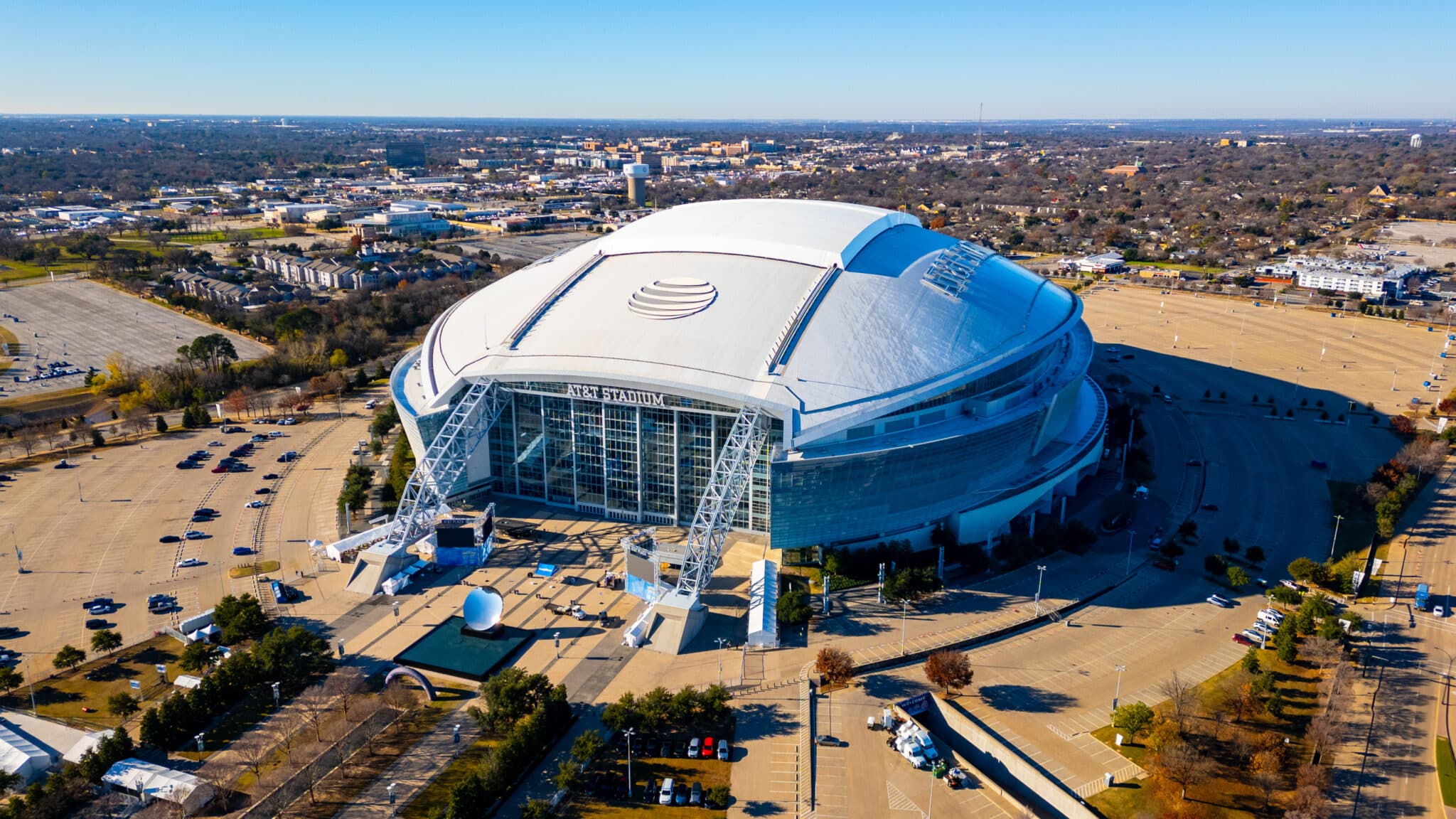
AT&T Stadium is massive. Iconic. And, it’s intentionally designed to be experienced even when no game is being played.
The Cowboys have turned their stadium into a year-round experiential marketing engine through immersive tours that give fans behind-the-scenes access. Visitors can walk the field, explore locker rooms, learn the architectural story of the venue, and see how one of the most recognizable franchises in sports operates from the inside.
This is a masterclass of storytelling at scale. The Dallas Cowboys’ stadium has become a physical brand expression, reinforcing the Cowboys’ identity as larger-than-life, premium, and deeply rooted in sports culture.
What makes this one of the strongest experiential marketing examples is its longevity. The experience doesn’t rely on a single event or even a game; it creates value every day, for fans who may not even attend a game, but still leave feeling closer to the brand.
Look at the interactions happening with your target audience. Is there a way to build an online element into a tangible experience? Are you keeping a dialogue going on and offline?
A major sign of marketing maturity in an organization is the level of experience they place in customer-facing roles (such as social media managers, customer experience, etc.). Unfortunately, many brands put their “greenest” people in these roles—preventing organizations from fully capturing their audience’s feedback and preventing audiences from an elevated experience.
There’s a reason why pro sports teams pull in top talent for game-day coverage. Inside the NBA, for example, features the beloved Charles Barkley and Shaq. College GameDay utilizes former athletes, coaches, and other experts to talk about the football games. Both shows have subject matter experts in charge of the dialogue, giving this dialogue the best people to engage audiences.

So don’t put your least experienced employees in charge of all the digital dialogue for your brand. Make sure that whoever is helping to create that dialogue knows and understands your company’s offering, your values, and how to interact with your audience in a way that is meaningful to them.
Do This: Don’t hire entry-level for audience-facing positions.
Design your own experiential marketing
Pro sports marketers have an obvious edge in creating customer experiences—their product is literally an experience—but their playbook is written for every brand in every industry. A stronger focus on experiential marketing truly can turn your brand observers into lifetime, loyal fans.
If you’re ready to take inspiration from these experiential marketing in sports examples and apply them to your own brand, we’re here to help.
At 97th Floor, we partner with teams who want to create experiences people remember. If you’re ready to build experiential marketing that connects, converts, and lasts, let’s build together.
Want more expert marketing content sent right to your inbox?